The prodigious juggling skills necessary for parenthood translate well to entrepreneurship. Here’s some advice on how to hang in there from the founders of Esoteric Food Company, maker of Zuké pickles.
Working women know the dilemma well: How can you start a family without torpedoing your career? America’s stingy parental-leave policies, platinum-expensive daycare, and a business culture that pays lip service to work-life balance but not much more, are enough to make any frustrated parent ask: Could you blaze a more accommodating career path on your own?The answer is yes, but it takes guts, planning, and patience to pursue this path successfully. Consider the Esoteric Food Company, a pickling business founded by two moms, Mara King and Willow King (no relation), in Boulder, Colorado. Their pickle brand, Zuké–the name derives from the Japanese term for pickled vegetables, zukemono–includes delicacies like juniper-scented Napa cabbage and a potent, earthy concoction of beets, dulse seaweed, and kale.Zuké bubbled up to prominence with surprising speed. A little over two years ago, Mara and Willow walked product samples into a Lucky’s Market in Boulder and landed their first corporate order. Says Willow, “We keep track of how long we’ve been in business by the age of Mara’s son Desmond. Our first product delivery happened right after he was born. It’s a fun parallel–plus, it just makes sense to think of the business like a child.” The two now have five children between them, from toddlers to teenagers.Zuké products are now sold regionally in 29 Whole Foods and many natural and organic groceries in an eight-state region ranging from Montana to Louisiana with Albert’s Organics. Moving from home kitchen to shared commissary to their own factory space (and pickling 25 tons of vegetables along the way), the Zuké ladies saw 100% growth in 2012 and expect 500% growth this year.
We talked with Mara and Willow about succeeding as both parents and entrepreneurs–and how you can walk into the adventure with your eyes open.1. Take opportunity where you find it–even if it arrives dressed as failure. Like other acts of insane heroism, many startups are born not out of bravery but necessity. “I worked as a chef for many years,” says Mara. “Then I lost my job and couldn’t find another.”Willow was in a similar boat: a former English teacher, she’d moved away from Boulder to California, then moved back with two young children, uncertain how to relaunch her career with kids. “Willow and I started getting together once a week and geeking out in the kitchen,” Mara recalls. Willow concurs, “We loved experimenting, looking for the next thing careerwise maybe, but only subconsciously. Pickling was one of the many food projects we made together, but they kept coming back.” She laughs. “They had a life of their own–literally.”That joke refers to the fact that pickling foods involves live-culture bacteria. Fermentation starts by adding sea salt to vegetables in a sealed jar; bacteria take over, producing a nutritious, zesty, long-lasting product whose taste mellows and alters over time.2. Connect your product with your personal story. You know your product has hit a foodie sweet spot when it’s the subject of a Portlandia sketch–in this case, We Can Pickle That! Zuké’s success can be partly attributed to how it intersects with a large community of enthusiasts. “Pickling is part of our cultural history,” says Mara. “Handmade things have that juju that comes with tradition–that’s coming back into vogue.”
Zuké’s marketing draws on its founders’ personal stories, and much of the product’s appeal is aspirational. The duo has logged countless hours handing out samples at local stores, chatting up customers who express envy and admiration for what they’re doing, revealing other business opportunities. “We’re also interested in teaching pickling classes,” Willow notes. “A strong component of getting people intrigued is making them part of the food’s life.” Call it social media of an intensely analog sort.Although it’s labor-intensive, offering in-store samples piques curiosity and remove objections to purchasing it. “We’ve sold anchovy and pear kimchee” that way, recalls Willow. “That catches people off guard, but our ideal consumer gets pleasure from trying something new and unusual and enjoying it.”
3. Work your network from multiple angles. Juggling parenthood and a new business means a broad range of networks. Not only can they work their industry-specific contacts, they can also tap into the local startup scene and in the case of the Kings, the sisterhood of female entrepreneurs.Willow and Mara worked these multiple networks adroitly. They connected with other startups as members at HUB Boulder, a startup coworking and networking space. To tap Boulder’s thriving natural products community, they joined Naturally Boulder and LOHAS (Lifestyles of Health and Sustainability); the latter is a university-affiliated program spanning health and fitness, the environment, sustainable living–what some call “crunchy-type” businesses. They’re also thick with various Meetup groups in Boulder focused on women entrepreneurs.4. It takes a village to raise a child or build a business. The Zuké team worked the community-marketing angle hard. Mara had local cred as a sushi chef, but zero suction in the grocery-store community. Their sales approach was grindingly face-to-face: walk into a store and ask to demo your product with a decision-maker. Amazingly, they usually got a friendly reception and practical advice, which they implemented humbly.Zuké benefited from word-of-mouth on two levels: face-to-face meetings got Zuké products into local organic stores. Word-of-mouth among friends also connected them with an angel investor who committed seed capital himself and introduced them to the right circles to raise more.As the business has grown, local contacts helped Zuké solve fresh conundrums like how to source organic Napa cabbage, an Asian staple food perfect for pickling, but rarely raised organically in the U.S.
5. Work at what you love, because you could be working for free for a while. “I had this big fat bank balance at the beginning of the year from selling my house,” Mara recalls. “I remember just watching it dwindle, the stress of that ever-decreasing number. The month I wrote my last check against it was the same month I got paid [by Zuké].” Luckily both women had financial ballast in their husbands’ steady jobs–Mara’s husband is a graphic designer, Willow’s is an architect–but neither could luxuriate without income for long. Both women quit part-time jobs in 2012 to commit to Zuké full-time.6. Forget separating work from family life. “For the first year, we worked Saturdays starting at 6 a.m., which nobody would be crazy enough to do but two moms,” Willow says. “We needed to pick our kids up [from daycare] in the afternoon, so we were willing to work at odd times and around each other.”If pre-dawn pickling sessions and pinch-hitting husbands couldn’t close the gap, they brought their kids to work. Here’s where a mix of ages comes in handy–babies could spend time in carriers while moms worked in the kitchen, and older kids amused themselves nearby or even pitched in with the work.In many ways, the prodigious juggling skills necessary for parenthood make mothers or fathers tailor-made for entrepreneurship. “It’s all about cramming in work wherever you can,” says Mara. “If the stress gets too much, we can always slice up a mountain of cabbage. When you get your hands on a bunch of vegetables, it’s very calming to the system.”
http://ozuke.com/wp-content/uploads/2017/05/OZUKE_LOGO_STACKED_BW.png00Ozukehttp://ozuke.com/wp-content/uploads/2017/05/OZUKE_LOGO_STACKED_BW.pngOzuke2014-01-16 04:16:442016-01-06 00:18:42Why Parents Make Great Entrepreneurs
After a wonderful month of butter cookies, eggnog and other sundry delights, it is time to clean the pipes. I have a couple of cleanses that I really like and think can work for different metabolisms and temperaments. One of my favorites is the Colorado Cleanse: http://lifespa.com/cleansing/colorado-cleanse/ which can be adapted to suit your needs. I often make this salad for the first four days (although the mustard is not really allowed)
but the oily delight of the avocado with the zing of citrus ginger kraut is very satisfying. I have also heard great things about what these ladies are up to: http://consciouscleanse.com/
and am eager to try it out this month. I will let you know how it goes!
I’ve heard that Pad Thai (stir-fried rice noodles Thai-style), the sweet and savory dish many Americans think of as a Thai staple, is not easily found in restaurants in Thailand. It is commonly prepared by street vendors (video), and is apparently rather ubiquitous in touristy areas. Well, I hope some day to be able to find out for myself. In the meantime, I prepare it at home, and can make a pretty good version thanks to Robert Danhi. Robert is a talented American chef who specializes in southeast Asian cooking. His book, ‘Southeast Asian Flavors‘ has won several awards. I feel fortunate to have had the opportunity to watch Robert prepare Pad Thai, and was careful to take lots of notes.
Pad Thai Ingredients:
1/2 lb Dried flat Thai noodles
1/4 Cup Red Boat fish sauce
2 TBS Tamarind pulp
1/4 Cup palm sugar
2-3 Dried roasted chilies, ground
2 TBS vegetable oil
1 TBS shallots, minced
1 TBS garlic, diced
2 Eggs, lightly beaten
1 TBS dried shrimp, chopped
3/4 Cup pressed tofu or chicken or protein, sliced into strips
1 TBS Pickled radish (daikon), chopped
1 Cup scallions (greens only), sliced diagonally
2 Cups mung bean sprouts
1/2 Cup dry roasted peanuts, chopped Ozuké Kale & Collards Kimchi
Water as needed Directions:
Instruction #1– Purchase excellent ingredients Each ingredient is essential, and most important are those in the special sauce! They create the tasty balance between sweet and sour, and are the foundation of Pad Thai. Where does the sour flavor come from? It comes from the tamarind fruit. I was able to find pure tamarind pulp (nothing added), and “seedless”. When I opened the bag, I found delicious pulp AND a gazillion seeds. Because of those seeds, preparing the tamarind pulp for the recipe took a bit more time than I had thought it would, but it was well worth it!
Where does the sweet come from? It comes from thick, rich palm sugar. Palm sugar is available in different forms. Because the paste dissolves more easily than discs, I prefer the paste.
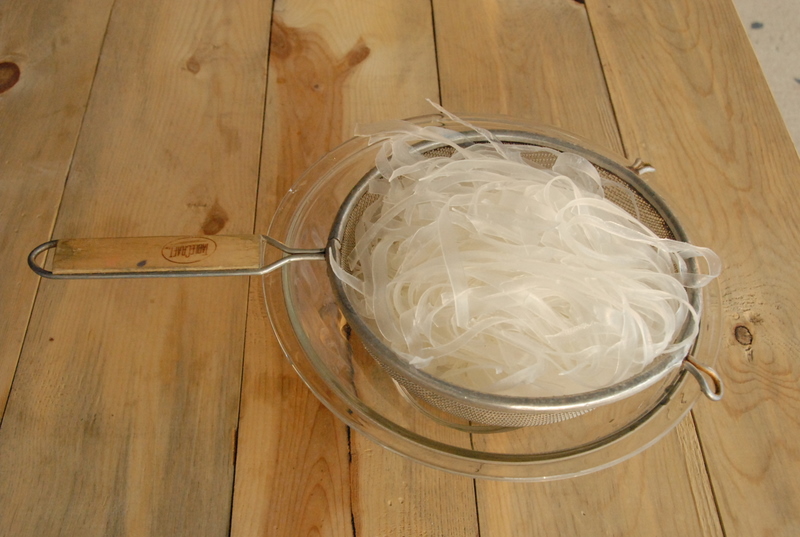
Instruction #2 – Prepare all your ingredients before cooking Begin by making tamarind paste for special sauce. To prepare the paste, break off a piece of the gooey tamarind, and mix with water. Use fingers to massage the pulp, removing seeds and any other plant material. Add more water if needed. Place tamarind pulp through a fine mesh strainer. Using a spoon, push through strainer, and scrape the bottom to collect the tamarind paste. Add the palm sugar to the prepared tamarind paste, blend thoroughly. Then add fish sauce and chili flakes, whisk. Set sauce aside, and prepare other ingredients for deliciousness! Noodles next – soak noodles in room temp water for 25 minutes. Drain noodles, and set aside. While noodles are soaking prepare other ingredients – pan roasted peanuts (chopped), lightly roasted Thai chilies (ground), scallions (sliced), radish (chopped), shrimp (chopped), tofu (sliced), eggs (lightly beaten). Set up your cooking station – mise en place. Instruction #3 – CookPad Thai
Heat pan on medium-high, once hot, add oil & garlic. Cook until edges are lightly brown. Push garlic to side of pan, add beaten eggs, and scramble. Keep garlic off to side. Add tofu, shrimp and radish. Mix it all together. Once mixed, add noodles, 2/3 of the special sauce, and some water. Toss well. Continue tossing until noodles are soft, but not mushy. Add water (for cooking) and more sauce (for flavor) as needed. Be sure to add water in small amounts to prevent noodles from getting soggy. Continue tossing. Once noodles are cooked, chewy NOT soggy, add most of the scallions, peanuts, and bean sprouts, reserving some for garnish. Mix well. Instruction #4 – Eat
Serve and garnish with more peanuts, bean sprouts, scallions, and Ozuké Kale & Collards Kimchi – Voilậ! Pad Thai that is great tasting and good for your gut, too! And perhaps the best part, you too can watch Robert prepare this recipe in his Thai Cooking Essentials class available at Craftsy.com.
Looking for a deliciously fun brunch, great ambience, and bottomless mimosa & bloody Mary’s? Then get yourself a reservation at Root Down (RD) in the Highlands neighborhood of Denver now! It takes some planning to get a table where tasty breakfast and lunch dishes are plentiful and doors close at 2:30 pm each weekend.
RD, Linger Eatery, and most recently, Root Down Denver International Airport (DIA), are where Chef D and his team work together with local farmers and artisanal food makers to create unique entrees. One of the most popular dishes at Root Down, is the vegetarian and gluten-free Eggs Benedict on the brunch menu. Instead of a traditional English muffin, hearty quinoa cakes are the foundation of this colorful eggs Benny. Atop the cakes is a generous layer of ozuké pickled beets that perfectly compliment the organic poached eggs, and the creamy rich dried tomato Hollandaise sauce. Citrus dressed arugula and roasted root vegetables complete this uniquely satisfying meal. For some time now, Chef D has been using ozuké pickled things on his Root Down brunch and raw night menus. Recently, he and Mara have been brainstorming about plans to include ozuké pickled things in new and exciting ways at all three restaurants. Can’t wait to taste what he creates! In the meantime, we’ll keep enjoying brunch at Root Down Denver, and we’ll be sure to visit their DIA location in the C concourse on our next trip. I know there will be lots of eclectic art to check out, refreshing beverages, and yummy food combinations. Plus there’s the Lite Brite bar at Linger Eatery!
University of Idaho and Colorado State University Extension Services are offering Preserve @ Home to teach adults how to safely preserve a variety of food products. Participants learn how to produce high quality preserved foods and the science behind food preservation and food safety.
Enrollment Deadline:
January 13, 2014
Online Class Starts:
January 16, 2014
For more information please contact Anne Zander at the CSU Extension of Boulder County azander@bouldercounty.org 303-678-6238
To view Preserve @ Home on-line course syllabus go to:
http://www.extension.colostate.edu/boulder/fcs.shtml
http://ozuke.com/wp-content/uploads/2017/05/OZUKE_LOGO_STACKED_BW.png00http://ozuke.com/wp-content/uploads/2017/05/OZUKE_LOGO_STACKED_BW.png2013-12-16 10:25:002015-08-06 18:41:26Preserve @ Home - CSU Extension Program web class
The perfect blend of two cultures, American and Korean. A classic American burger and a traditional Korean kimchi, with a twist.
Kimchi (or kimchee) also known as gimche is a traditional naturally fermented Korean condiment seasoned with spices and chiles. Interestingly, prior to European contact with Korea, kimchi was much simpler, consisting of cabbage and beef stock. After the chili pepper was introduced to Asia, Koreans began to use it to enhance the flavor of their national dish. In a country as diverse as Korea there are regional and seasonal variations. In northern Korea, kimchi is typically milder than its southern counterpart. Because south Korea is closer to the ocean, recipes include fish sauce or shrimp paste for seasoning and are typically spicier than the northern style. Mara has added yet another level of sophistication to our kimchi by including a touch of sweetness. She uses pears to balance out the sour flavors of fermented foods. Using daikon for bitterness, anchovies for savory, and sea salt, all 5 basic tastes are found in this delicious recipe. During the growing season, the pears are sourced from Ela Family Farms in Hotchkiss, Colorado. The Ela’s have been farming mouthwatering fruits for four generations. They grow peaches, apples, pears, plums, and heirloom tomatoes on Colorado’s fertile western slope. Their land is beautiful anytime of year, but especially so during the spring when the trees are flowering.Mara uses the finest ingredients available, and has created another unique recipe. This is ozuké’s first non-vegan pickled thing. Ozuké’s Anchovy & Pear Kimchi is seasoned with fish sauce, which gives it that rich umami (savory) taste. Besides just eating it straight out of the jar, my family agreed that a grassfed burger was the perfect way to appreciate all those flavors quickly. Plus, it was a beautiful Sunday afternoon, perfect for grilling! What follows is a food pairing idea.
Beef Burger recipe:
1 lb of ground beef 100% grassfed
Salt & pepper or WFM Rocky Mountain Pepper Blend to taste
Directions:
Prepare grill. Mix by hand ground beef and seasonings. Form patties. Grill to desired temperature. Prepare additional toppings. Assemble and eat! We decided to try different toppings with our Anchovy & Pear Burgers. Avocados on one, cheese and tomatoes on the other. All combinations were delicious. This tasty kimchi has limited availability for the time being. It is available in Boulder at Fresh Thymes Eatery, in Longmont at Lucky’s Market, in Lafayette at Isabelle Farm Stand, in Denver at Natural Grocers by Vitamin Cottage on Leetsdale, and in Albuquerque, New Mexico at La Montanita Food Coop Valley location.
The flavors are so perfectly balanced that it makes a great companion to almost any dinner. Pick up a jar to bring to your Hanukkah celebration and Thanksgiving dinner. And let us know what you think. Gobble Gobble!


Why Parents Make Great Entrepreneurs
/in Press /by OzukeWhy Parents Make Great Entrepreneurs: Advice From A Pair Of Artisanal Pickling Pros
By Jude Stewart
January 16, 2013
The prodigious juggling skills necessary for parenthood translate well to entrepreneurship. Here’s some advice on how to hang in there from the founders of Esoteric Food Company, maker of Zuké pickles.
Working women know the dilemma well: How can you start a family without torpedoing your career? America’s stingy parental-leave policies, platinum-expensive daycare, and a business culture that pays lip service to work-life balance but not much more, are enough to make any frustrated parent ask: Could you blaze a more accommodating career path on your own?The answer is yes, but it takes guts, planning, and patience to pursue this path successfully. Consider the Esoteric Food Company, a pickling business founded by two moms, Mara King and Willow King (no relation), in Boulder, Colorado. Their pickle brand, Zuké–the name derives from the Japanese term for pickled vegetables, zukemono–includes delicacies like juniper-scented Napa cabbage and a potent, earthy concoction of beets, dulse seaweed, and kale.Zuké bubbled up to prominence with surprising speed. A little over two years ago, Mara and Willow walked product samples into a Lucky’s Market in Boulder and landed their first corporate order. Says Willow, “We keep track of how long we’ve been in business by the age of Mara’s son Desmond. Our first product delivery happened right after he was born. It’s a fun parallel–plus, it just makes sense to think of the business like a child.” The two now have five children between them, from toddlers to teenagers.Zuké products are now sold regionally in 29 Whole Foods and many natural and organic groceries in an eight-state region ranging from Montana to Louisiana with Albert’s Organics. Moving from home kitchen to shared commissary to their own factory space (and pickling 25 tons of vegetables along the way), the Zuké ladies saw 100% growth in 2012 and expect 500% growth this year.
We talked with Mara and Willow about succeeding as both parents and entrepreneurs–and how you can walk into the adventure with your eyes open.1. Take opportunity where you find it–even if it arrives dressed as failure.
Like other acts of insane heroism, many startups are born not out of bravery but necessity. “I worked as a chef for many years,” says Mara. “Then I lost my job and couldn’t find another.”Willow was in a similar boat: a former English teacher, she’d moved away from Boulder to California, then moved back with two young children, uncertain how to relaunch her career with kids. “Willow and I started getting together once a week and geeking out in the kitchen,” Mara recalls. Willow concurs, “We loved experimenting, looking for the next thing careerwise maybe, but only subconsciously. Pickling was one of the many food projects we made together, but they kept coming back.” She laughs. “They had a life of their own–literally.”That joke refers to the fact that pickling foods involves live-culture bacteria. Fermentation starts by adding sea salt to vegetables in a sealed jar; bacteria take over, producing a nutritious, zesty, long-lasting product whose taste mellows and alters over time.2. Connect your product with your personal story.
You know your product has hit a foodie sweet spot when it’s the subject of a Portlandia sketch–in this case, We Can Pickle That! Zuké’s success can be partly attributed to how it intersects with a large community of enthusiasts. “Pickling is part of our cultural history,” says Mara. “Handmade things have that juju that comes with tradition–that’s coming back into vogue.”
Zuké’s marketing draws on its founders’ personal stories, and much of the product’s appeal is aspirational. The duo has logged countless hours handing out samples at local stores, chatting up customers who express envy and admiration for what they’re doing, revealing other business opportunities. “We’re also interested in teaching pickling classes,” Willow notes. “A strong component of getting people intrigued is making them part of the food’s life.” Call it social media of an intensely analog sort.Although it’s labor-intensive, offering in-store samples piques curiosity and remove objections to purchasing it. “We’ve sold anchovy and pear kimchee” that way, recalls Willow. “That catches people off guard, but our ideal consumer gets pleasure from trying something new and unusual and enjoying it.”
3. Work your network from multiple angles.
Juggling parenthood and a new business means a broad range of networks. Not only can they work their industry-specific contacts, they can also tap into the local startup scene and in the case of the Kings, the sisterhood of female entrepreneurs.Willow and Mara worked these multiple networks adroitly. They connected with other startups as members at HUB Boulder, a startup coworking and networking space. To tap Boulder’s thriving natural products community, they joined Naturally Boulder and LOHAS (Lifestyles of Health and Sustainability); the latter is a university-affiliated program spanning health and fitness, the environment, sustainable living–what some call “crunchy-type” businesses. They’re also thick with various Meetup groups in Boulder focused on women entrepreneurs.4. It takes a village to raise a child or build a business.
The Zuké team worked the community-marketing angle hard. Mara had local cred as a sushi chef, but zero suction in the grocery-store community. Their sales approach was grindingly face-to-face: walk into a store and ask to demo your product with a decision-maker. Amazingly, they usually got a friendly reception and practical advice, which they implemented humbly.Zuké benefited from word-of-mouth on two levels: face-to-face meetings got Zuké products into local organic stores. Word-of-mouth among friends also connected them with an angel investor who committed seed capital himself and introduced them to the right circles to raise more.As the business has grown, local contacts helped Zuké solve fresh conundrums like how to source organic Napa cabbage, an Asian staple food perfect for pickling, but rarely raised organically in the U.S.
5. Work at what you love, because you could be working for free for a while.
“I had this big fat bank balance at the beginning of the year from selling my house,” Mara recalls. “I remember just watching it dwindle, the stress of that ever-decreasing number. The month I wrote my last check against it was the same month I got paid [by Zuké].” Luckily both women had financial ballast in their husbands’ steady jobs–Mara’s husband is a graphic designer, Willow’s is an architect–but neither could luxuriate without income for long. Both women quit part-time jobs in 2012 to commit to Zuké full-time.6. Forget separating work from family life.
“For the first year, we worked Saturdays starting at 6 a.m., which nobody would be crazy enough to do but two moms,” Willow says. “We needed to pick our kids up [from daycare] in the afternoon, so we were willing to work at odd times and around each other.”If pre-dawn pickling sessions and pinch-hitting husbands couldn’t close the gap, they brought their kids to work. Here’s where a mix of ages comes in handy–babies could spend time in carriers while moms worked in the kitchen, and older kids amused themselves nearby or even pitched in with the work.In many ways, the prodigious juggling skills necessary for parenthood make mothers or fathers tailor-made for entrepreneurship. “It’s all about cramming in work wherever you can,” says Mara. “If the stress gets too much, we can always slice up a mountain of cabbage. When you get your hands on a bunch of vegetables, it’s very calming to the system.”
January cleanse
/in Uncategorized /by OzukeAfter a wonderful month of butter cookies, eggnog and other sundry delights, it is time to clean the pipes. I have a couple of cleanses that I really like and think can work for different metabolisms and temperaments. One of my favorites is the Colorado Cleanse: http://lifespa.com/cleansing/colorado-cleanse/ which can be adapted to suit your needs. I often make this salad for the first four days (although the mustard is not really allowed)
but the oily delight of the avocado with the zing of citrus ginger kraut is very satisfying. I have also heard great things about what these ladies are up to: http://consciouscleanse.com/
and am eager to try it out this month. I will let you know how it goes!
Here is to a month of vibrant health for all.
Pad Thai w/Kale & Collards Kimchi
/in Gluten Free Recipes, Kale & Collards Kim Chi /by OzukeI’ve heard that Pad Thai (stir-fried rice noodles Thai-style), the sweet and savory dish many Americans think of as a Thai staple, is not easily found in restaurants in Thailand. It is commonly prepared by street vendors (video), and is apparently rather ubiquitous in touristy areas. Well, I hope some day to be able to find out for myself. In the meantime, I prepare it at home, and can make a pretty good version thanks to Robert Danhi. Robert is a talented American chef who specializes in southeast Asian cooking. His book, ‘Southeast Asian Flavors‘ has won several awards. I feel fortunate to have had the opportunity to watch Robert prepare Pad Thai, and was careful to take lots of notes.
Pad Thai Ingredients:
 Directions:
1/2 lb Dried flat Thai noodles
1/4 Cup Red Boat fish sauce
2 TBS Tamarind pulp
1/4 Cup palm sugar
2-3 Dried roasted chilies, ground
2 TBS vegetable oil
1 TBS shallots, minced
1 TBS garlic, diced
2 Eggs, lightly beaten
1 TBS dried shrimp, chopped
3/4 Cup pressed tofu or chicken or protein, sliced into strips
1 TBS Pickled radish (daikon), chopped
1 Cup scallions (greens only), sliced diagonally
2 Cups mung bean sprouts
1/2 Cup dry roasted peanuts, chopped
Ozuké Kale & Collards Kimchi
Water as needed
Instruction #1 – Purchase excellent ingredients
Each ingredient is essential, and most important are those in the special sauce! They create the tasty balance between sweet and sour, and are the foundation of Pad Thai. Where does the sour flavor come from? It comes from the tamarind fruit. I was able to find pure tamarind pulp (nothing added), and “seedless”. When I opened the bag, I found delicious pulp AND a gazillion seeds. Because of those seeds, preparing the tamarind pulp for the recipe took a bit more time than I had thought it would, but it was well worth it!
Where does the sweet come from? It comes from thick, rich palm sugar. Palm sugar is available in different forms. Because the paste dissolves more easily than discs, I prefer the paste.
Instruction #2 – Prepare all your ingredients before cooking To prepare the paste, break off a piece of the gooey tamarind, and mix with water. Use fingers to massage the pulp, removing seeds and any other plant material. Add more water if needed. Place tamarind pulp through a fine mesh strainer. Using a spoon, push through strainer, and scrape the bottom to collect the tamarind paste.
 Add the palm sugar to the prepared tamarind paste, blend thoroughly. Then add fish sauce and chili flakes, whisk. Set sauce aside, and prepare other ingredients for deliciousness!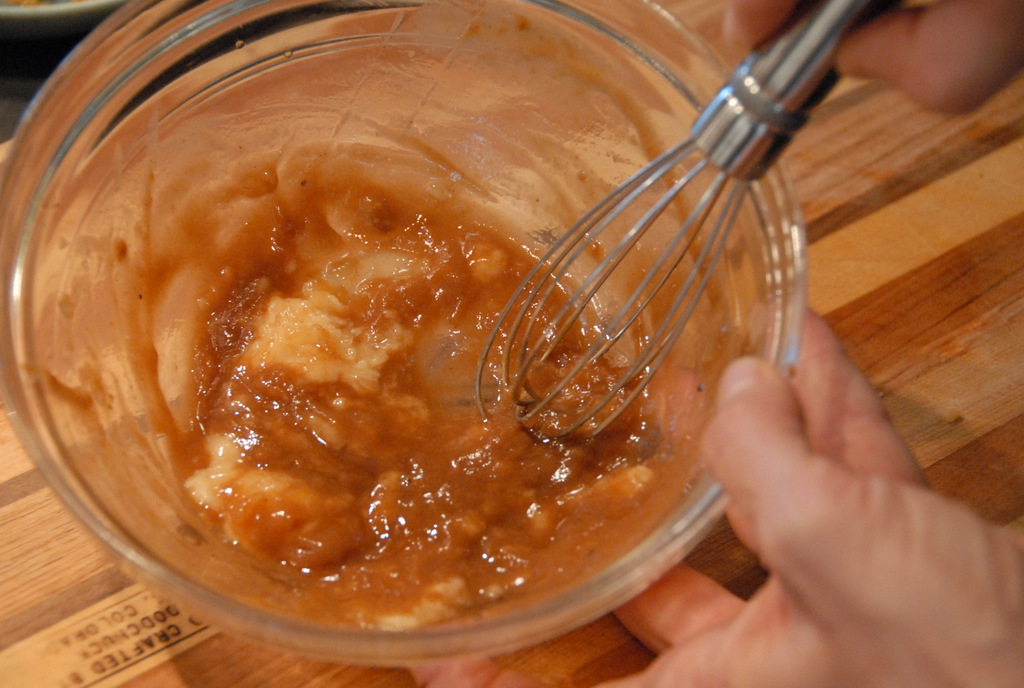
 Noodles next – soak noodles in room temp water for 25 minutes. Drain noodles, and set aside.
  While noodles are soaking prepare other ingredients – pan roasted peanuts (chopped), lightly roasted Thai chilies (ground), scallions (sliced), radish (chopped), shrimp (chopped), tofu (sliced), eggs (lightly beaten). Set up your cooking station – mise en place.
  Instruction #3 – Cook Pad Thai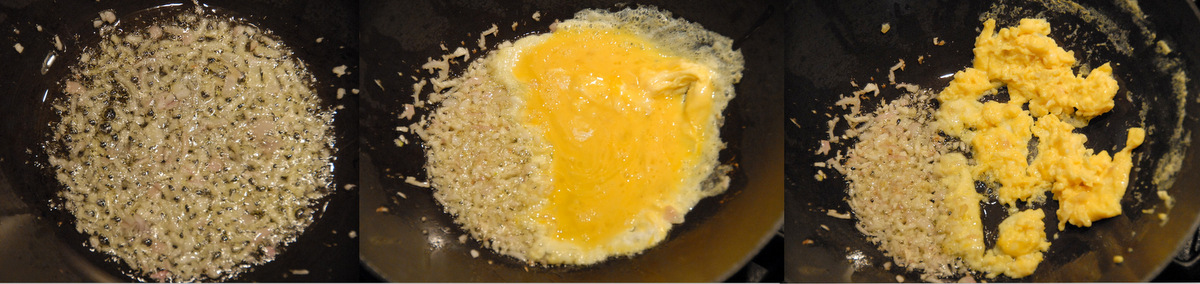
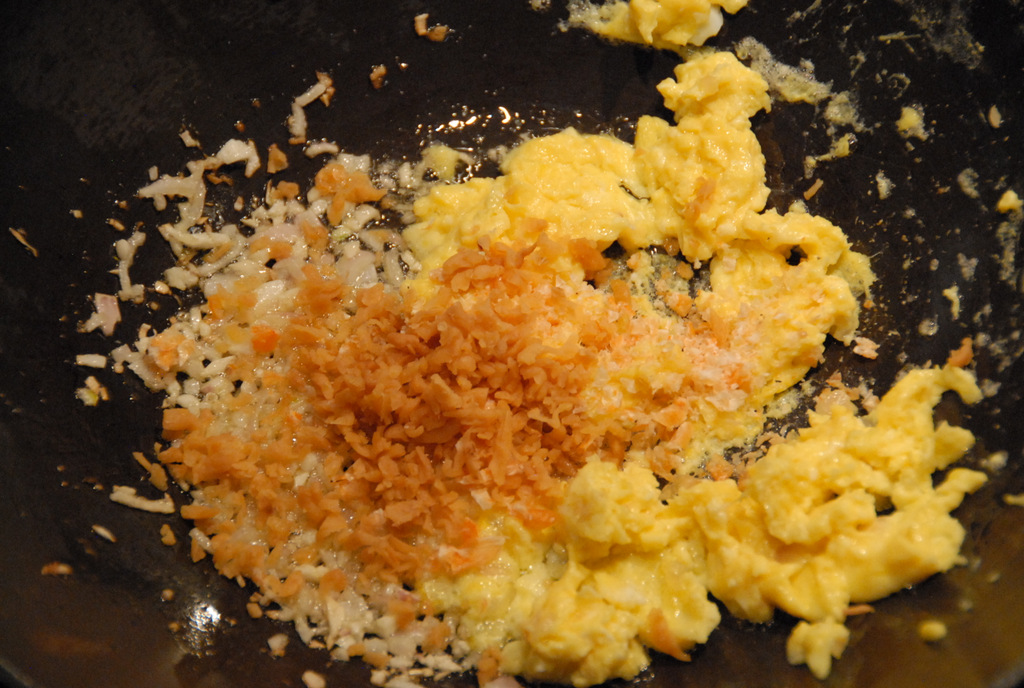 Once mixed, add noodles, 2/3 of the special sauce, and some water. Toss well.
 Continue tossing until noodles are soft, but not mushy. Add water (for cooking) and more sauce (for flavor) as needed. Be sure to add water in small amounts to prevent noodles from getting soggy. Continue tossing. Once noodles are cooked, chewy NOT soggy, add most of the scallions, peanuts, and bean sprouts, reserving some for garnish. Mix well.
  Instruction #4 – Eat
Begin by making tamarind paste for special sauce.
Heat pan on medium-high, once hot, add oil & garlic. Cook until edges are lightly brown. Push garlic to side of pan, add beaten eggs, and scramble. Keep garlic off to side. Add tofu, shrimp and radish. Mix it all together.
Serve and garnish with more peanuts, bean sprouts, scallions, and Ozuké Kale & Collards Kimchi – Voilậ! Pad Thai that is great tasting and good for your gut, too! And perhaps the best part, you too can watch Robert prepare this recipe in his Thai Cooking Essentials class available at Craftsy.com.
gin hâi à-ròi (Enjoy your meal)!

Root Down! New Denver Restaurant Review
/in Other, Restaurants, Reviews /by OzukeLooking for a deliciously fun brunch, great ambience, and bottomless mimosa & bloody Mary’s? Then get yourself a reservation at Root Down (RD) in the Highlands neighborhood of Denver now! It takes some planning to get a table where tasty breakfast and lunch dishes are plentiful and doors close at 2:30 pm each weekend.
RD, Linger Eatery, and most recently, Root Down Denver International Airport (DIA), are where Chef D and his team work together with local farmers and artisanal food makers to create unique entrees. One of the most popular dishes at Root Down, is the vegetarian and gluten-free Eggs Benedict on the brunch menu. Instead of a traditional English muffin, hearty quinoa cakes are the foundation of this colorful eggs Benny. Atop the cakes is a generous layer of ozuké pickled beets that perfectly compliment the organic poached eggs, and the creamy rich dried tomato Hollandaise sauce. Citrus dressed arugula and roasted root vegetables complete this uniquely satisfying meal.
 For some time now, Chef D has been using ozuké pickled things on his Root Down brunch and raw night menus. Recently, he and Mara have been brainstorming about plans to include ozuké pickled things in new and exciting ways at all three restaurants. Can’t wait to taste what he creates!
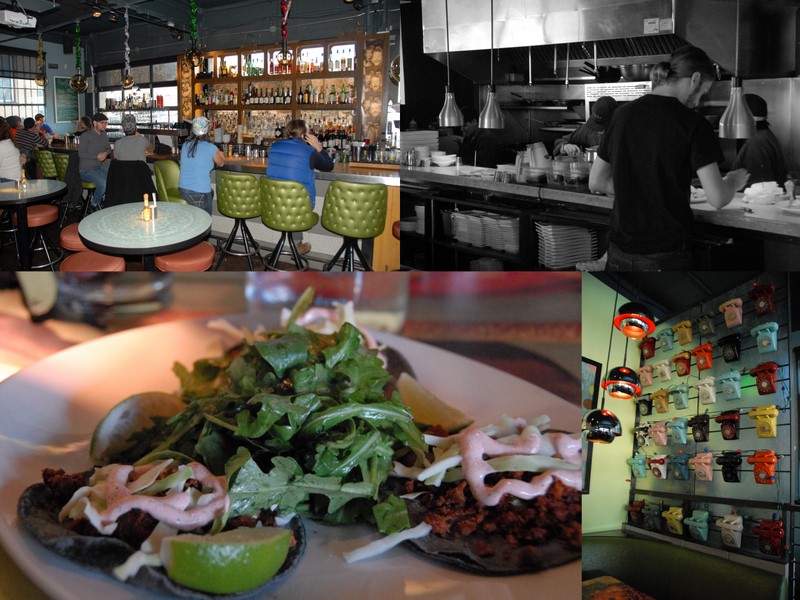 In the meantime, we’ll keep enjoying brunch at Root Down Denver, and we’ll be sure to visit their DIA location in the C concourse on our next trip. I know there will be lots of eclectic art to check out, refreshing beverages, and yummy food combinations. Plus there’s the Lite Brite bar at Linger Eatery!
• 1600 W. 33RD AVENUE, DENVER, CO 80211 | 303.993.4200 | INFO@ROOTDOWNDENVER.COM •
DINNER HOURS
Monday – Thursday, 5pm – 10pm
Friday & Saturday, 5pm – 11pm
Sunday, 5pm – 9pm
(Bar stays open later – 12am-ish)
HAPPY HOUR (bar only)
Monday – Friday, 4:30pm – 7pm
BRUNCH HOURS
Saturday – Sunday, 10am – 2:30pm
Preserve @ Home – CSU Extension Program web class
/in Other /byUniversity of Idaho and Colorado State University Extension Services are offering Preserve @ Home to teach adults how to safely preserve a variety of food products. Participants learn how to produce high quality preserved foods and the science behind food preservation and food safety.
Enrollment Deadline:
January 13, 2014
Online Class Starts:
January 16, 2014
For more information please contact Anne Zander at the CSU Extension of Boulder County azander@bouldercounty.org 303-678-6238
To view Preserve @ Home on-line course syllabus go to:
http://www.extension.colostate.edu/boulder/fcs.shtml
Anchovy & Pear Kimchi Burger
/2 Comments/in International Recipes /by maraThe perfect blend of two cultures, American and Korean. A classic American burger and a traditional Korean kimchi, with a twist.
Kimchi (or kimchee) also known as gimche is a traditional naturally fermented Korean condiment seasoned with spices and chiles. Interestingly, prior to European contact with Korea, kimchi was much simpler, consisting of cabbage and beef stock. After the chili pepper was introduced to Asia, Koreans began to use it to enhance the flavor of their national dish. In a country as diverse as Korea there are regional and seasonal variations. In northern Korea, kimchi is typically milder than its southern counterpart. Because south Korea is closer to the ocean, recipes include fish sauce or shrimp paste for seasoning and are typically spicier than the northern style. Mara has added yet another level of sophistication to our kimchi by including a touch of sweetness. She uses pears to balance out the sour flavors of fermented foods. Using daikon for bitterness, anchovies for savory, and sea salt, all 5 basic tastes are found in this delicious recipe.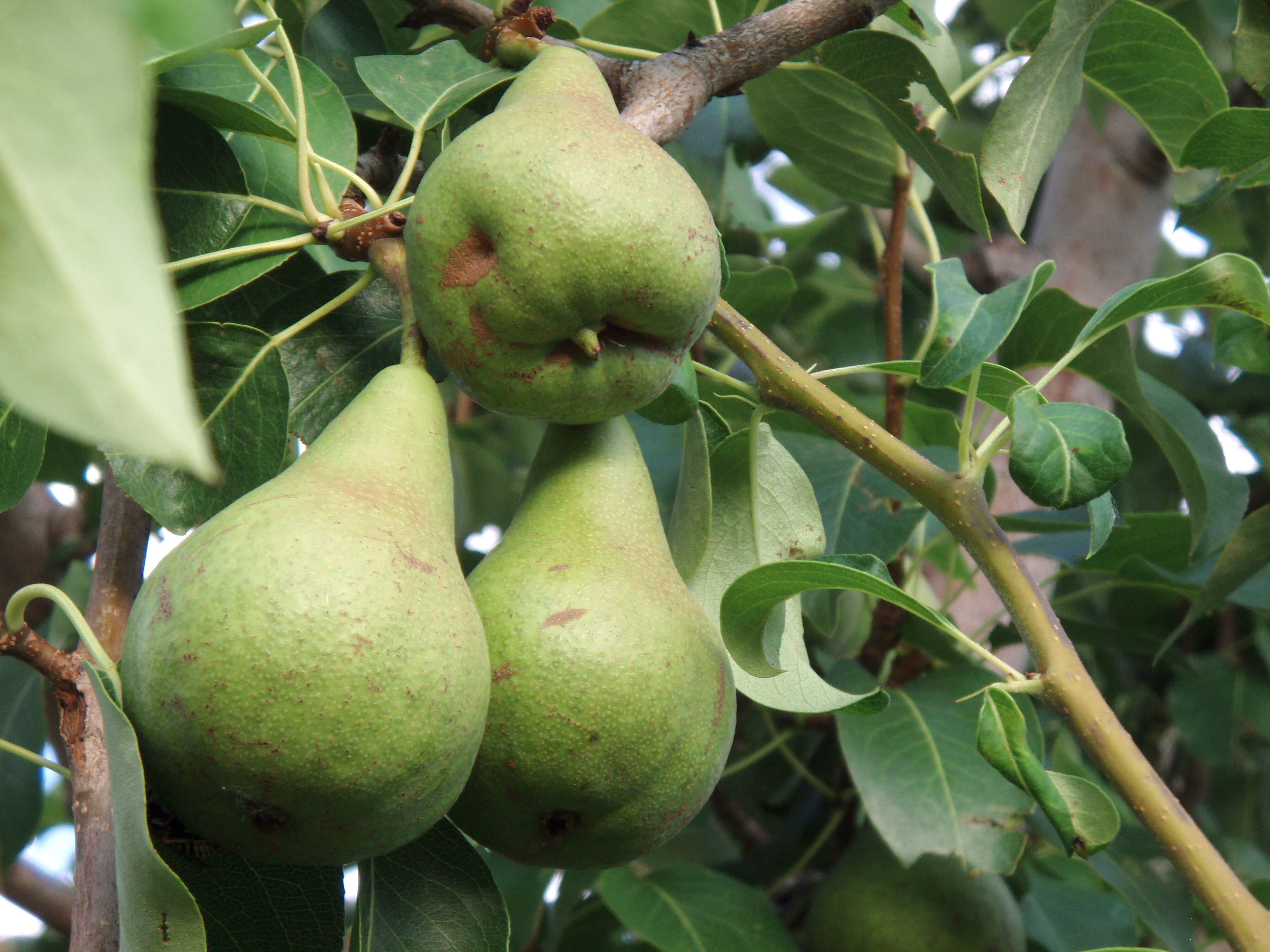 During the growing season, the pears are sourced from Ela Family Farms in Hotchkiss, Colorado. The Ela’s have been farming mouthwatering fruits for four generations. They grow peaches, apples, pears, plums, and heirloom tomatoes on Colorado’s fertile western slope. Their land is beautiful anytime of year, but especially so during the spring when the trees are flowering.
 Mara uses the finest ingredients available, and has created another unique recipe. This is ozuké’s first non-vegan pickled thing. Ozuké’s Anchovy & Pear Kimchi is seasoned with fish sauce, which gives it that rich umami (savory) taste. Besides just eating it straight out of the jar, my family agreed that a grassfed burger was the perfect way to appreciate all those flavors quickly. Plus, it was a beautiful Sunday afternoon, perfect for grilling! What follows is a food pairing idea.
Beef Burger recipe:
1 lb of ground beef 100% grassfed
Salt & pepper or WFM Rocky Mountain Pepper Blend to taste
Directions:
 We decided to try different toppings with our Anchovy & Pear Burgers. Avocados on one, cheese and tomatoes on the other. All combinations were delicious. This tasty kimchi has limited availability for the time being. It is available in Boulder at Fresh Thymes Eatery, in Longmont at Lucky’s Market, in Lafayette at Isabelle Farm Stand, in Denver at Natural Grocers by Vitamin Cottage on Leetsdale, and in Albuquerque, New Mexico at La Montanita Food Coop Valley location.
Prepare grill. Mix by hand ground beef and seasonings. Form patties. Grill to desired temperature. Prepare additional toppings. Assemble and eat!